Current location:Home > Product Center > HAFNIUM OXIDE
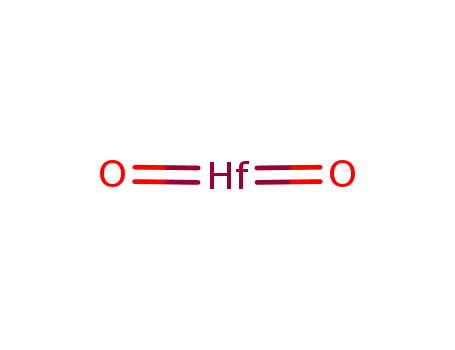
HAFNIUM OXIDE
- NameHAFNIUM OXIDE
- CAS12055-23-1
- Purity99%
Product Details
Good factory supply good HAFNIUM OXIDE 12055-23-1
- Molecular Formula:HfO2
- Molecular Weight:210.489
- Appearance/Colour:powder
- Melting Point:2810 °C
- Refractive Index:2.13 (1700 nm)
- PSA:34.14000
- Density:9.68 g/mL at 25 °C(lit.)
- LogP:-0.23760
HAFNIUM OXIDE(Cas 12055-23-1) Usage
|
Preparation |
Hafnium dioxide may be prepared by heating the metal with air or oxygen at elevated temperatures (above 400°C). Also, the oxide can be obtained by igniting hafnium salts, such as hydroxide, oxalate, sulfate, nitride, carbide, boride or tetrachloride in air. Hafnium carbide converts to dioxide when heated with oxygen at 500°C. The commercial products generally contain about 95-97% hafnium dioxide mixed with small amount of zirconium oxide. The compound can be prepared at 99.9% purity. |
|
Reactions |
Hafnium dioxide reacts with chlorine in the presence of carbon at elevated temperatures to yield hafnium tetrachloride, HfCl4. When ammonium hydroxide solution is added to an acid solution of hafnium dioxide, the hydrous oxide, HfO2?xH2O precipitates. When heated with concentrated sulfuric acid, the product is hafnium sulfate, Hf(SO4)2. Reaction with carbon at 1,500°C produces hafnium carbide, HfC. Reaction with sodium fluorosilicate, Na2SiF6 at elevated temperatures yields sodium fluorohafnate, Na2HfF6. |
|
Flammability and Explosibility |
Nonflammable |
|
Potential Exposure |
Hafnium metal has been used as a control rod material in nuclear reactors. Thus, those engaged in fabrication and machining of such rods may be exposed. |
|
Shipping |
UN1326 Hafnium powder, wetted with not <,25% water (a visible excess of water must be present) (1) mechanically produced, particle size<53 μm; (2) chemically produced, particle size<840 μm, Hazard Class: 4.1; Labels: 4.1-Flammable solid. UN2545 Hafnium pow der, dry, Hazard Class: 4.1; Labels: 4.1-Flammable solid. UN1346 Hafnium powder, wetted with not less than 25% water (a visible excess of water must be present) (1) mechanically produced, particle size less than 53 μm; (2) chemically produced, particle size less than 840 μm, Hazard Class: 4.1; Labels: 4.1-Flammable solid. |
|
Incompatibilities |
Fine powder or dust may form explosive mixture in air. The powder is highly flammable and a strong reducing agent. The powder or dust reacts with moisture forming flammable hydrogen gas; may spontaneously ignite on contact with moist air; and at higher temperatures, with nitrogen, phosphorous, oxygen, halogens, and sulfur; contact with hot nitric acid; heat, shock, friction, strong oxidizers; or ignition sources may cause explosions. |
|
Waste Disposal |
Recovery. Consider recycling, otherwise, this chemical must be disposed of in compliance with existing federal and local regulations. |
|
Physical Properties |
White crystalline solid, when heated at 1,500°C, it transforms into a tetragonal modification with shrinkage; tetragonal form converts to a cubic polymorph with fluorite structure when heated at 2,700°C; density 9.68 g/cm3; melts at 2,774°C; insoluble in water; dissolves slowly in hydrofluoric acid at ordinary temperatures. |
InChI:InChI=1/Hf.2O/rHfO2/c2-1-3
12055-23-1 Relevant articles
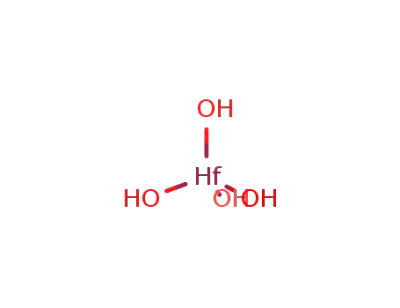
Infrared spectrum and structure of the Hf(OH)4 molecule
Wang, Xuefeng,Andrews, Lester
, p. 7189 - 7193 (2008/10/09)
Laser-ablated Hf atoms react with H2O2 a...
12055-23-1 Process route
-

-
hafnium

-
-
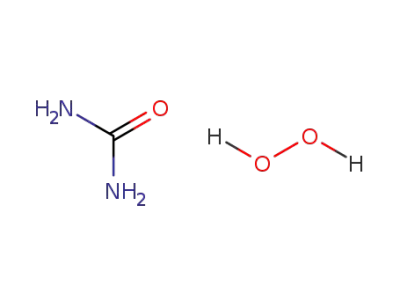
124-43-6
urea hydrogen peroxide adduct

-

-
12055-23-1
hafnium dioxide
-
-
12027-05-3
hafnium hydroxide
-
-
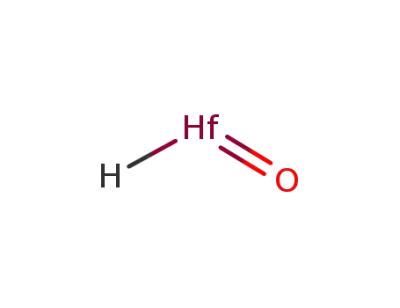
HHfO
-
-
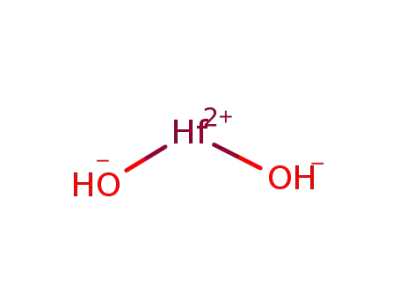
91223-89-1
hafnium dihydroxide
| Conditions | Yield |
|---|---|
|
In
gaseous matrix;
laser-ablated Hf atoms were reacted with H2O2 molecules in excess argon during condensation onto a 10 K cesium iodide window; Andrews, L. Chem. Soc. Rev., 2004, 33, 123; detected by IR spectra;
|
-
-
hafnium
-

-
1333-74-0
hydrogen
-
-
80937-33-3
oxygen
-
-
12055-23-1
hafnium dioxide
-
-
12027-05-3
hafnium hydroxide
-
-
HHfO
-
-
91223-89-1
hafnium dihydroxide
-
-
12770-26-2
HfH2
| Conditions | Yield |
|---|---|
|
In
gaseous matrix;
byproducts: HfH4; other Radiation; laser-ablated Hf atoms were reacted with H2 and O2 molecules in excess argon full-arc irradiation and annealin to 24-30 K; Andrews, L. Chem. Soc. Rev., 2004, 33, 123; detected by IR spectra;
|
12055-23-1 Upstream products
-
124-43-6
urea hydrogen peroxide adduct
-
1333-74-0
hydrogen
-
80937-33-3
oxygen
12055-23-1 Downstream products
-
102-09-0

bis(phenyl) carbonate